
Why Your Business Needs a Smarter Way to Track Inventory
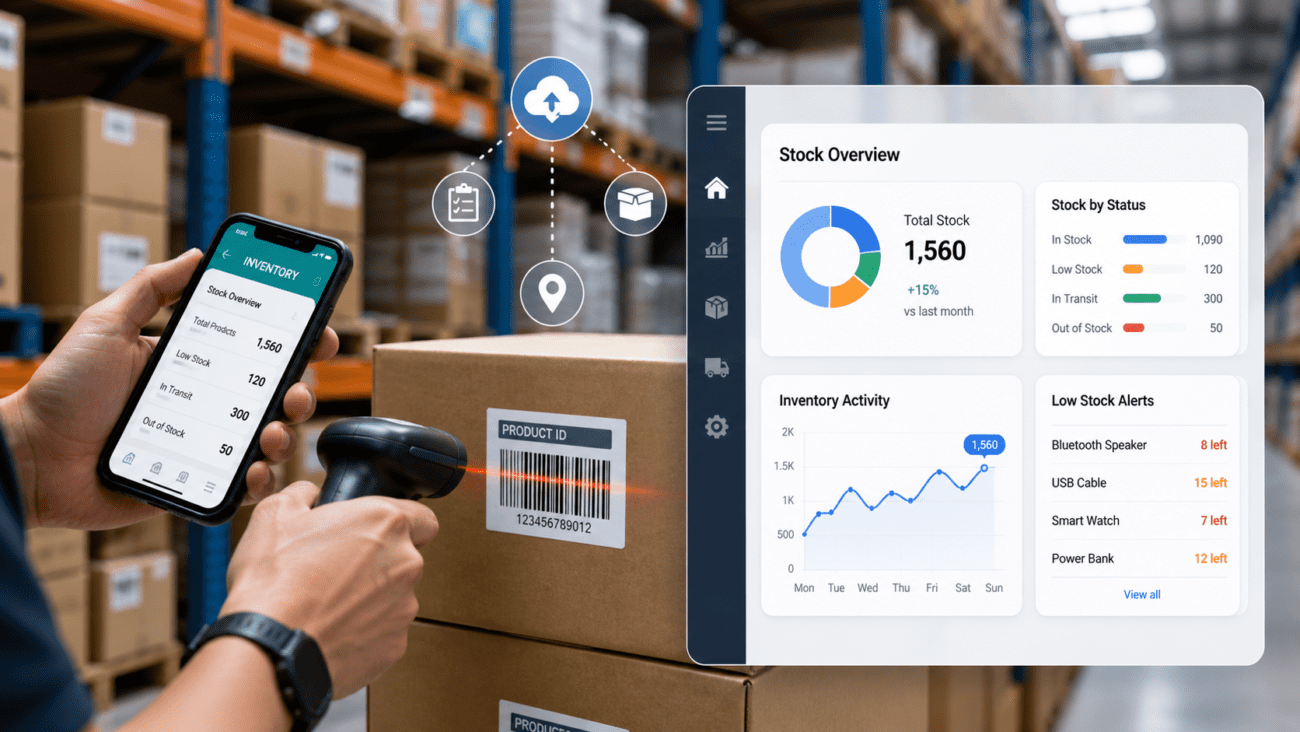
Running a business is already hard. So when you lose track of your stock, things get messy fast. Orders get delayed. Customers get frustrated. And your team ends up spending hours counting shelves instead of doing real work. The good news is that there is a simple fix. Barcode inventory management has helped thousands of businesses take full control of their stock. And it is easier to set up than most people think.
In this post, we will walk you through what this system is, how it works, and why it is one of the smartest moves you can make for your business today.
What Is Barcode Inventory Management?
At its core, barcode inventory management is a way to track your products using barcodes. Every item in your stock gets a unique barcode. When items come in or go out, someone scans that barcode. The system then updates your inventory count automatically. No manual entry. No guesswork.
It sounds simple because it is. But the results it delivers are far from simple. Businesses that switch to this method often see faster order processing, fewer errors, and better visibility into what they have on hand at any given time.
Why Manual Tracking Just Does Not Work Anymore
A lot of small businesses still rely on spreadsheets or even handwritten logs to manage their stock. That worked fine years ago. But today, it is too slow and too easy to get wrong. Here is why manual systems cause problems:
• A single wrong number in a spreadsheet can throw off your entire stock count
• Updates take time, and by then the data is already outdated
• It is hard to share accurate information across a team in real time
• Counting items by hand during audits eats up valuable hours
• Human errors add up quickly, especially during busy seasons
Furthermore, as your business grows, manual tracking becomes even harder to manage. What works for 50 products rarely works for 500. So, switching to a smarter system early on saves you a lot of trouble later.
How the System Actually Works
The process is straightforward. First, each product gets labeled with a barcode. This could be a standard UPC barcode or a QR code, depending on your setup. Next, your team uses a barcode scanner or even a smartphone to scan items as they move in and out of storage.
When a scan happens, the system records it right away. Your inventory count updates in real time. So instead of waiting until the end of the week to know what you have, you can check at any moment. That kind of visibility is a game changer for purchasing decisions, customer service, and overall planning.
Additionally, most systems today connect with your sales and ordering tools. So when a product sells, the system automatically adjusts your stock count. When stock runs low, it can even send you an alert so you can reorder before you run out.
Key Benefits You Will Notice Right Away
Switching to this system does not just fix one problem. It solves several at once. Here are some of the benefits businesses notice almost immediately after making the switch:
• Stock counts become accurate within days instead of weeks
• Team members spend less time on manual data entry
• Reordering becomes easier because you always know your current stock levels
• Customer orders go out faster because your team knows exactly where everything is
Beyond those quick wins, there are also longer-term benefits. Over time, you build a clearer picture of which products move fast and which sit on the shelf. That helps you make smarter buying decisions and reduce waste.
Is It Hard to Get Started?
This is one of the first questions people ask. And the honest answer is no. Getting started is much easier than most business owners expect.
You will need a few basic things to begin. First, you need barcodes for your products. If your items already have barcodes printed on the packaging, you are halfway there. If not, you can print your own labels using a standard label printer. Second, you need a scanner. These range from simple handheld devices to mobile apps that let you scan using a phone camera. Third, you need software to manage the data. There are many options out there, from free tools for small businesses to full enterprise platforms.
Once everything is in place, training your team is usually quick. Most people can learn the basics in an afternoon. After that, it just becomes part of the daily routine.
Which Businesses Benefit the Most?
Almost any business that holds physical products can benefit from this system. However, some industries see particularly strong results.
Retail stores deal with hundreds or even thousands of products at once. Keeping track of all of them manually is nearly impossible. With barcode scanning, even large product catalogs become manageable. Similarly, warehouses and distribution centers process large volumes of goods every day. Speed and accuracy matter a lot in these environments, and barcodes deliver both.
Small businesses also benefit greatly. In fact, many small business owners say that switching to this system was one of the best decisions they made. It gives them the kind of visibility and control that used to be available only to much larger companies.
Common Mistakes to Avoid When Setting Up
While the setup process is generally smooth, there are a few mistakes worth watching out for:
• Not labeling every product from the start — gaps in your system lead to gaps in your data
• Choosing software that does not connect with your other tools — integration matters a lot
• Skipping team training — even a simple system needs proper onboarding
• Failing to do regular spot checks — technology helps, but occasional manual checks keep things honest
If you avoid these mistakes, your transition will go smoothly. Moreover, you will start seeing real results much sooner.
What to Look for in a Good System
Not all barcode tools are the same. When choosing a system, think about what your business actually needs. Do you need real-time syncing across multiple locations? Do you need to connect with your accounting software? Do you need mobile access for your team on the floor?
Look for a system that is easy to use, offers good customer support, and can grow with your business. Also, check whether it offers reporting features. The ability to see trends in your stock movement over time is incredibly useful for planning.
Final Thoughts
If you are still managing your stock manually, now is a good time to make a change. Barcode inventory management gives you accuracy, speed, and control that manual systems simply cannot match. It reduces errors, saves time, and helps your team work more confidently every day.
The best part is that you do not need to be a tech expert to make it work. The tools are user-friendly, the setup is manageable, and the benefits show up quickly. Whether you run a small shop or a growing warehouse, this system can help you stay on top of your stock without the stress.
Start small if you need to. Pick one part of your inventory, test the system, and see the results for yourself. Once you do, it is hard to imagine going back to the old way of doing things.