
Seamlessly Convert Images to 3D Printable Models
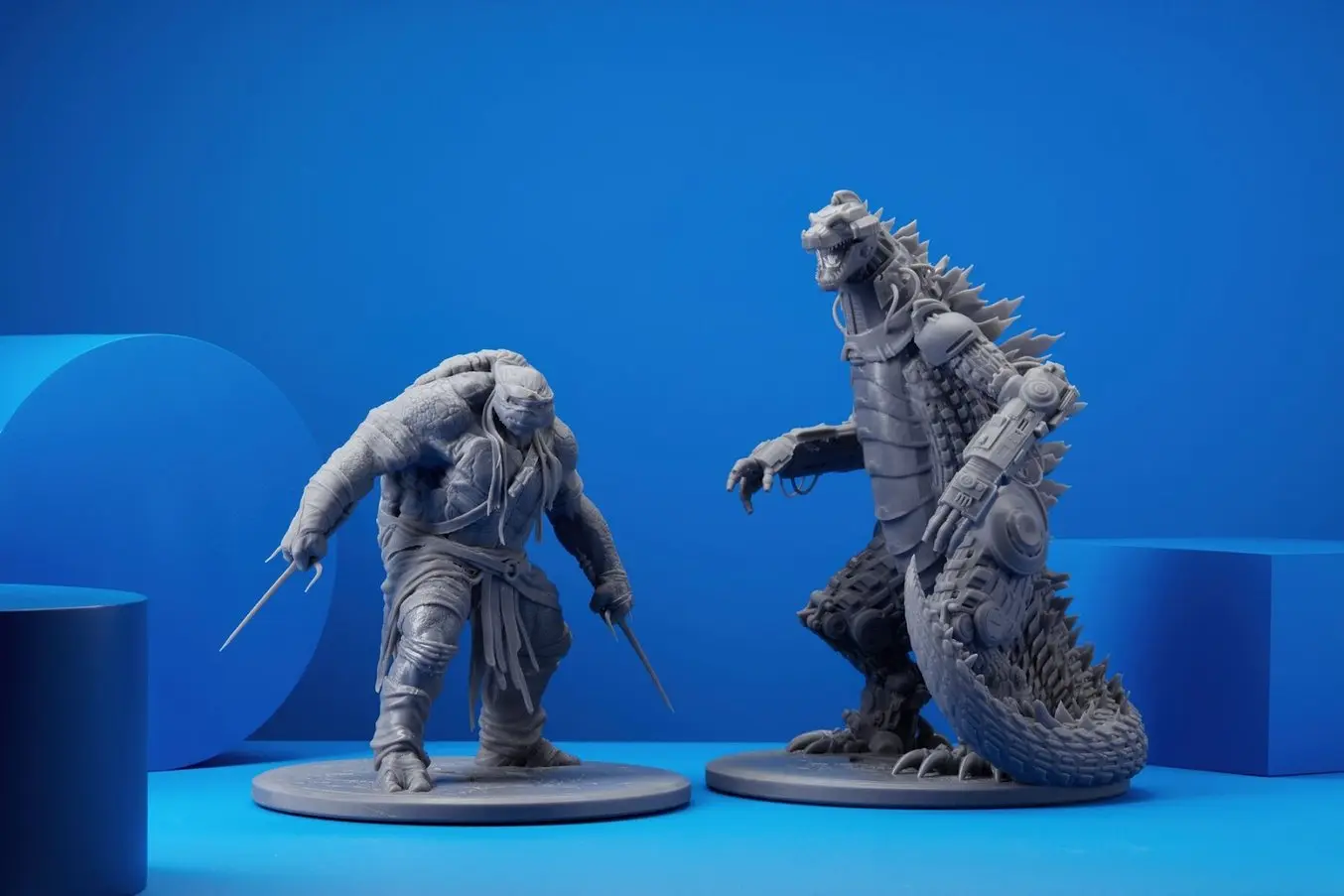
Turning a photo to 3D model no longer feels out of reach. This guide shows creators, engineers, educators, and agencies in the United States how to convert images to 3D and produce reliable, 3D printable models. You will learn the basics of depth, mesh structure, and the STL workflow so your parts print cleanly on both FDM and resin machines.
We start simple and build up. First, understand how image to STL tools infer depth and generate a mesh you can edit. Then we compare formats and prep files for smooth slicing. Along the way, we highlight practical choices that save time, reduce failures, and improve finish quality.
To speed results, we introduce Hyper3D image to stl for accurate surface capture from pictures and Vidu image to video AI for animated previews that help clients approve designs faster. By the end, you will have a clear STL workflow that moves from clean source imagery to export-ready files, plus motion previews that make your work stand out.
What It Takes to Turn 2D Images into 3D Printable STL Models
Turning a flat photo into a solid model starts with image-to-3D fundamentals. You infer shape from light and color, then translate that into printable geometry. Keep scale consistent from the first step to avoid unit mix-ups when exporting in STL format.
Good inputs make strong outputs. Careful image selection for 3D, clean lighting, and disciplined file choices reduce rework. Tools like Hyper3D image to stl help, but the craft still depends on how you guide each stage.
Understanding depth inference, mesh generation, and topology
Depth maps estimate how far each pixel sits from the camera. You can derive them with AI monocular depth, multi-view stereo, or photogrammetry. Once you have a map, algorithms lift the surface into 3D space.
Next comes mesh generation. Vertices, edges, and faces form the shell. Strong mesh topology avoids non-manifold edges and self-intersections that can crash slicers. Favor clean quads or well-organized triangles, then remesh as needed for smooth curvature.
Before export, confirm watertight geometry. Validate normals, remove loose parts, and check overhangs so the STL format slices cleanly in Ultimaker Cura or PrusaSlicer.
Choosing the right source images for accurate 3D reconstruction
Smart image selection for 3D starts with high resolution and even, diffuse light. Avoid motion blur and deep shadows that confuse depth maps. A plain background with strong subject contrast speeds segmentation.
For multi-view workflows, capture multiple angles with steady framing. If you rely on a single photo, expect to sculpt and smooth to resolve ambiguous areas. Hyper3D image to stl can assist, but clarity at capture time still reigns.
Key differences between STL, OBJ, and GLB for printing
STL format stores triangulated geometry only. It is the go-to for printing, widely supported, and ideal for watertight parts. OBJ carries geometry plus UVs and materials via MTL; many artists use it for look-dev, then convert to STL to print.
GLB packages geometry, textures, and materials in one compact file. It shines for lightweight previews and client reviews. In most print pipelines, OBJ vs GLB is about visualization, while the final export returns to STL for slicing.
Essential Tools and Software for Image-to-3D Workflows
After generating a base mesh from photos, the right toolkit turns rough geometry into a clean, printable asset. Use desktop apps to sculpt, retopologize, and verify a watertight mesh before slicing. Keep an eye on scale, feature size, and printability checks so the model works with your material and printer profile.
Desktop modeling suites for refinement and repair
Blender shines for sculpting touch-ups, retopology, and modifiers like Solidify and Remesh to close gaps. MeshLab excels at decimation, surface reconstruction, and normal fixes that improve shading and accuracy. Autodesk Fusion 360 adds parametric control for precise holes, slots, and toleranced fits. Meshmixer remains handy for quick analysis, hollowing, and basic supports when testing resin concepts.
Use these tools in sequence: refine forms in Blender, optimize triangles in MeshLab, lock down dimensions in Autodesk Fusion 360, and prototype edits in Meshmixer. This keeps detail where it matters while avoiding heavy files that slow slicing.
Mesh cleanup, watertightness, and printability checks
Start with manifold and self-intersection scans, then remove stray shells. Fill holes, unify normals, and confirm a watertight mesh so slicers read one closed volume. Decimate only as needed, preserving edges and curves that drive visual quality.
Run printability checks for minimum wall thickness, overhang angles, islands, and tiny features. Match detail to nozzle diameter or resin pixel size. Simple edits—thickening walls or adding chamfers—often prevent failed layers.
Slicer compatibility and printer profiles
Cura and PrusaSlicer accept STL or OBJ and support adaptive layers, tree or organic supports, and tuned material profiles. For resin, Lychee Slicer and Chitubox handle hollowing, drain holes, and auto supports with predictable results. Keep profiles current for printers like Prusa MK4, Bambu Lab X1C, Creality K1 Max, Elegoo Mars, and Anycubic Photon.
Calibrate layer height, nozzle size, temperature, and exposure to match PLA, PETG, ABS, ASA, or photopolymer resins. If you present designs to clients, pair static previews with Vidu image to video AI to showcase motion, while ensuring the model that reaches Cura or PrusaSlicer remains optimized for reliable output.
Step-by-Step Workflow: From Photo to Printable STL
A reliable pipeline turns flat pictures into solid, print-ready parts. Start with careful photo preprocessing, then move into depth estimation and a first-pass mesh. Follow with mesh validation and repair. Finish with units, tolerances, and STL export so your slicer reads dimensions correctly.
Preprocessing images: lighting, background removal, and scaling
Begin with clean inputs. Correct exposure and white balance in Adobe Photoshop or GIMP, reduce noise, and apply precise background removal or automatic matting. Keep a ruler or a known object in-frame to lock scale. This photo preprocessing step prevents guesswork later and keeps details sharp.
Generating the base 3D model and validating geometry
Use AI depth estimation or multi-view reconstruction to build the first mesh. When single or limited images are all you have, Hyper3D image to stl can accelerate the jump from pixels to polygons. Open the result in Blender or MeshLab and run mesh validation: fix non-manifold edges, inverted normals, self-intersections, and any floating parts.
Repairing, hollowing, and adding supports for FDM and resin printers
Strength and print success depend on smart edits. Thicken thin walls for FDM and orient to reduce overhangs. For resin, apply hollowing with a 2–3 mm shell and add 2–4 drain holes at low points to manage suction. Choose supports that match the job: tree or organic supports for cleaner FDM surfaces, tuned tip sizes for resin to prevent failures.
Exporting STL with correct units and tolerances
Run a final repair pass and set scale to millimeters. For functional fits, apply clearances of 0.1–0.3 mm for resin and 0.2–0.5 mm for FDM, depending on calibration. Complete the STL export in binary format to keep files compact, and confirm millimeters on slicer import so dimensions stay true.
Print-Ready Optimization Techniques for Better Results
Start with orientation optimization to balance looks and strength. Face the most visible area upward, and align stress paths with filament lines on FDM. Pair that with adaptive layer height: use 0.08–0.16 mm on curves and 0.2–0.28 mm on flats to cut time while keeping detail.
Dial in bed adhesion before anything else. Calibrate first-layer flow, set the right Z-offset, and match plate choice to material—PEI for PLA and PETG, glue stick for tricky jobs, or a textured plate for grip. Run a quick first-layer test to verify coverage at the edges.
Pick infill patterns for the job, not by habit. Gyroid and cubic spread loads well for functional parts. Concentric supports thin shells with minimal scarring. For “resin-like” surfaces on FDM, try low infill with thicker walls to maintain stiffness and a clean finish.
Apply support tuning to reduce marks and cleanup. On PLA, lower density and use thicker support lines for easy removal. On resin printers, set lighter touchpoints and add islands under overhangs. Combine blockers and custom trees to protect faces that must stay pristine.
Finish with surface smoothing that fits the material. Enable ironing in Cura for glossy top layers. After printing, sand with progressive grits, then use a filler primer before paint. ABS can take vapor smoothing for a sealed, durable skin; keep ventilation and safety in mind.
Validate tolerances with fast benchmarks. Print temperature and stringing towers to lock in a stable range. Use clearance tests to confirm press fits and snap joints before long runs. When planning batches, preview moves and overhangs with Vidu image to video AI to spot risk zones early.
For resin, wash parts fully in isopropyl alcohol or a dedicated solution, agitate to reach cavities, then cure to the manufacturer’s spec. Proper timing prevents brittleness and preserves detail you gained from adaptive layer height and careful support tuning.
Pro move: Combine orientation optimization with targeted surface smoothing to minimize sanding on hero faces while keeping internal strength where it matters.
Hyper3D image to stl,Vidu image to video AI
Turn static visuals into a clear path from concept to print. A streamlined Hyper3D image to stl workflow pairs with AI 3D reconstruction to build an accurate mesh from images, while motion clips guide fast client approvals. The result is a focused, animated 3D showcase that explains form, scale, and finish before you hit slice.
Using Hyper3D image to stl to convert complex images into accurate meshes
Start with product photos, relief-style logos, or clean concept art. Hyper3D applies depth inference and topology mapping to yield an accurate mesh from images that preserves fine edges and keeps seams tight. Export the mesh, then refine in Blender or Autodesk Meshmixer for watertight checks and unit scaling.
This Hyper3D image to stl workflow cuts manual sculpt time and reduces cleanup. It captures small ridges, embossed text, and fillets that often get lost, setting you up for reliable slicing on both FDM and resin machines.
Enhancing presentations with Vidu image to video AI for animated previews
Use Vidu image to video AI previews to turn still renders and turntables into short clips. Show material swaps, lighting passes, and exploded views that communicate assembly order and tolerances. Add simple branding, part names, and millimeter scales so reviewers understand size and fit at a glance.
These animated 3D showcase clips clarify intent without long calls. Stakeholders see how the part seats, where supports go, and how surfaces will read under gloss, satin, or matte finishes.
Combining static STL assets with motion previews for client approvals
Deliver a clean STL alongside Vidu image to video AI previews for quick client approvals. The file satisfies fabrication needs, while the video removes guesswork on orientation, texture expectations, and post-processing steps.
This pairing speeds feedback loops in agencies, e-commerce, and classrooms. By aligning the AI 3D reconstruction output with an animated 3D showcase, teams iterate faster, avoid print rework, and keep budgets on track.
Advanced Tips: Texturing, Scaling, and Material Considerations
Texturing for print needs a different mindset than game art. Use normal maps for printing only as guides. When you want raised grain or knurling that you can feel, convert those cues into true geometry detail with displacement or a high-to-low bake. Keep amplitudes modest so edges do not chip during cleanup or post-cure.
When scaling a mesh from Hyper3D image to stl, verify feature depth after rescale. Fine textures can vanish or turn brittle if you enlarge or shrink without reapplying displacement. A quick test patch helps dial in the look before you commit to a full build.
Normal maps vs. true geometry for print detail
Renders can look sharp, but printers read shape, not shading. Bake normals into height data to produce true geometry detail, or use a displacement modifier driven by grayscale maps. Clip extremes to avoid paper-thin fins. For tiny patterns, widen valleys instead of pushing tall peaks; this balances strength and visibility.
After conversion, run a mesh check and decimate only where curvature is gentle. Preserve edge loops around ridges so sanding does not flatten the effect. Keep a consistent texel-to-millimeter scale across parts for even results.
Wall thickness, infill strategy, and resin vs. filament choices
Follow practical wall thickness guidelines. With a 0.4 mm nozzle on FDM, aim for 2–3 perimeters for 0.8–1.2 mm minimum walls. Resin can resolve finer lines, but hollow shells work best at 1.5–2.5 mm to resist heat and impacts. Set infill to the job: 20–30% gyroid for general use, then raise perimeters or density where loads concentrate. Resin prints rely on shell strength more than infill, so add ribs instead of heavy cores.
Pick materials by duty cycle in the classic resin vs FDM debate. PLA offers easy tuning and dimensional stability, PETG adds impact and chemical resistance, ABS or ASA handle heat and sun, and tough photopolymers like Siraya Tech Tenacious blends help resin parts survive stress.
Tolerances for snap fits, joints, and functional parts
Design tolerances for fits to match your machine. For snug resin parts, start near 0.2–0.3 mm clearance. For FDM, 0.3–0.6 mm works depending on filament, cooling, and layer height. Add slight chamfers to fight elephant’s foot and ease insertion. Include dog-bone fillets in internal corners so tabs seat cleanly.
Lock critical features with a parametric pass after a Hyper3D image to stl export. In tools like Autodesk Fusion 360, overlay bosses, bores, and datums while keeping the organic base. Print a gauge or a small joint first, verify the snap, then scale the rest of the assembly with the proven clearances.
Troubleshooting Common Image-to-3D Conversion Issues
If your model looks inside-out in the slicer, the surface is likely flipped. Recalculate or solve inverted normals and set a consistent face orientation in Blender or Autodesk Meshmixer. Non-manifold edges and hidden holes can trigger slicer errors, so run an automatic pass to fix non-manifold mesh, then manually bridge any tricky gaps to repair STL files cleanly. Keep units straight: STL has no units, so export in millimeters and confirm scale on import to avoid tiny or oversized parts.
Jagged contours often come from sensor artifacts. Before meshing, remove noise in depth maps with bilateral or median filters, then remesh with a smoother target edge length. If the model is sluggish to preview, your topology is too heavy. Decimate to reduce triangles while preserving curvature, and recheck for new non-manifold seams. Unsupported overhangs cause droops or breaks; reorient for better angles, add supports, or split the model into printable sections.
For resin printers, failed cavities usually mean poor venting or weak scaffolds. Add drain holes at low points and raise support density in stress zones to repair STL printability. On FDM machines, warping hints at weak bed adhesion or cooling. Use a brim, bump bed temperature, and enclose ABS or ASA jobs. Layer shifts point to mechanics—tighten belts, lower acceleration, and verify nozzle clearance to curb slicer errors downstream.
When clients misread size or detail, produce a quick motion preview with Vidu image to video AI, adding a meter-stick overlay or an exploded view to catch issues early. If detail is missing from a single photo, improve source quality, capture more angles, or sculpt in true geometry with displacement. Apply this checklist—solve inverted normals, fix non-manifold mesh, remove noise in depth maps, and repair STL—to turn shaky reconstructions into reliable, print-ready parts.
FAQ
How do I convert a single 2D image into a 3D printable STL?
Start by creating a depth map using AI monocular depth estimation or a tool like Hyper3D image to stl. Generate the base mesh, then refine in Blender or MeshLab by fixing non-manifold edges, filling holes, and validating normals. Export a watertight STL in millimeters and verify scale in your slicer before printing.
What’s the difference between STL, OBJ, and GLB for 3D printing?
STL stores only triangulated geometry and is the standard for printing. OBJ adds UVs and materials via MTL, useful for texturing but usually converted to STL for fabrication. GLB/GLTF is compact for web and review with textures and materials, great for client previews, but you’ll still export STL for the final print.
Which images work best for accurate 3D reconstruction?
Use high-resolution photos with even, diffuse lighting and minimal motion blur. Keep backgrounds clean with strong contrast to help segmentation. For multi-view methods, capture multiple angles. With a single image, plan on extra smoothing and sculpting to resolve ambiguities.
How does depth inference and mesh generation actually work?
Depth inference estimates how far each pixel is from the camera, producing a depth map. Mesh generation converts that depth into vertices, edges, and faces. Good topology avoids self-intersections and non-manifold edges, resulting in a cleaner, printable model.
How do I ensure my model is watertight and printable?
Run manifold checks, fill holes, remove intersecting shells, and unify normals in Blender, Meshmixer, or MeshLab. Decimate judiciously to reduce triangle count without losing curvature. Then validate in a slicer like Ultimaker Cura or PrusaSlicer for walls, overhangs, and small features.
What units should I use when exporting STL files?
Use millimeters consistently throughout your workflow. STL files don’t store units, so confirm millimeters on export and double-check size on import in your slicer to avoid scale errors.
How do I prepare models differently for FDM vs. resin printers?
For FDM, thicken walls, orient to reduce overhangs, and use tree or organic supports. For resin, hollow the model to 2–3 mm shells, add 2–4 drain holes at low points, and use tuned support tip sizes. Each technology benefits from targeted orientation and support strategies.
What tolerances should I design for functional parts?
For FDM, start with 0.2–0.5 mm clearance for sliding fits, up to 0.6 mm for looser fits depending on nozzle and cooling. For resin, 0.1–0.3 mm often works due to higher resolution. Test with quick clearance gauges before committing to production.
How can Hyper3D image to stl help with complex images?
Hyper3D image to stl uses AI-driven depth inference to produce clean meshes from single or limited images. It preserves fine features, reduces manual sculpting, and speeds up getting to a watertight, printable STL.
How do I create animated previews for client reviews?
Use Vidu image to video AI to turn static renders or turntables into short, annotated clips. Show exploded views, assembly order, and scale overlays in millimeters. This helps clients approve designs faster and reduces misunderstandings.
Can I combine motion previews with static STL assets?
Yes. Deliver the STL for fabrication alongside a Vidu image to video AI preview. The video communicates design intent, surface expectations, and assembly, while the STL provides the exact geometry for printing.
What are best practices for printer profiles and slicer settings?
Use calibrated profiles in Ultimaker Cura, PrusaSlicer, Lychee Slicer, or Chitubox tailored to machines like Prusa MK4, Bambu Lab X1C, Creality K1 Max, Elegoo Mars, or Anycubic Photon. Match nozzle size, layer height, temperature, and resin exposure to your material.
How should I orient parts for strength and surface quality?
Align load paths with filament lines for FDM and place show surfaces upward. Use adaptive layer heights: 0.08–0.16 mm on curves and 0.2–0.28 mm on flats to balance detail and speed. For resin, orient to minimize suction and ensure proper drainage.
Do normal maps carry over to physical print detail?
No. Normal maps are visual only. For real surface texture, convert detail into true geometry with displacement or baking workflows. Keep displacement moderate to avoid fragile features.
What wall thickness and infill should I use?
For FDM with a 0.4 mm nozzle, use 0.8–1.2 mm minimum walls (2–3 perimeters). Choose gyroid or cubic infill at 20–30% for general parts. Resin prints rely more on shell thickness—aim for 1.5–2.5 mm when hollowed—and less on infill.
How can I fix non-manifold edges, flipped normals, or holes?
In Blender, use mesh analysis and Solidify/Remesh modifiers. In Meshmixer or Autodesk Netfabb, run auto-repair to close gaps, flip normals, and remove self-intersections. Always recheck in your slicer after repairs.
Why does my STL appear the wrong size in the slicer?
STL lacks unit data. If your model imports too large or small, re-export in millimeters and confirm the same unit setting on import. Keep a ruler or known object in photos to set accurate scale early.
How do I reduce print time without losing detail?
Use adaptive layer heights, orient parts to minimize supports, and decimate excess mesh density while preserving curvature. Choose efficient infill patterns and increase wall counts instead of very high infill when strength is needed.
What causes warping, layer shifts, or suction failures?
Warping stems from poor adhesion or drafts; use brims, raise bed temperature, or enclose ABS/ASA. Layer shifts often mean loose belts or high acceleration—tighten mechanics and slow down. Resin suction failures indicate weak venting or supports—add drain holes and increase support density.
How do I showcase overhang behavior before printing batches?
Produce a short Vidu image to video AI preview with annotations that highlight overhang angles, support touchpoints, and expected surface finish. This visual check helps you refine orientation and support strategy pre-print.
Can I add precise mechanical features to AI-generated meshes?
Yes. Import the mesh into Autodesk Fusion 360 to add parametric bosses, holes, and mating features while keeping the organic form. Then round-trip the model for final mesh checks before slicing.
Which materials should I choose for my use case?
PLA is easy and dimensionally stable, PETG offers impact and chemical resistance, ABS/ASA handle heat and outdoor use, and photopolymer resins range from standard to tough or flexible. Match material to performance, finish, and environmental needs.
How do I validate tolerances quickly?
Print small calibration pieces: temperature and stringing towers for tuning, plus clearance tests with stepped gaps. Adjust slicer settings and design clearances based on your results before running production parts.
What if detail is missing from a single-image reconstruction?
Improve source quality, add more angles if possible, and enhance with sculpting or displacement to create true geometry. Hyper3D image to stl can produce a cleaner base mesh, reducing manual rework.
How can I prevent clients from misinterpreting scale or shape?
Include a Vidu image to video AI preview with a metric overlay, exploded views, and notes on recommended printer settings. This bridges the gap between the digital model and the physical outcome for faster approvals.