
Wood Chippers Explained: How They Work and How to Operate Them Safely
Managing Green Waste on New Zealand Properties
The mild, wet climate of New Zealand drives rapid plant growth, and lifestyle blocks, orchards, and large gardens generate a steady stream of prunings, hedge trimmings, and storm debris. Hauling this material away is slow and costly, which is why many property owners now process it on site. A wood chipper turns branches into mulch that can be reused on garden beds and paths, closing the loop on green waste.
How a Wood Chipper Works
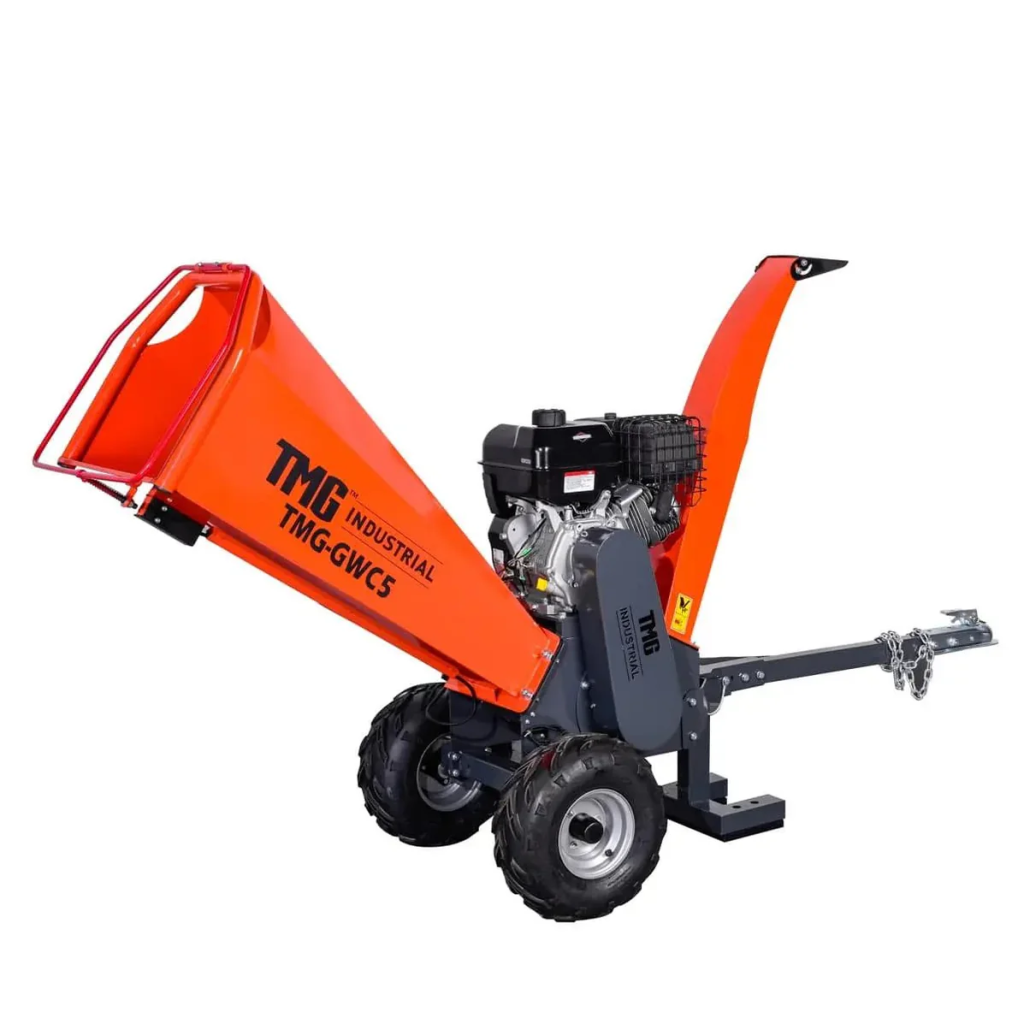
A petrol engine drives a heavy rotating element fitted with blades. In a disc chipper, the blades are mounted on a spinning steel disc, while in a drum chipper they sit on a rotating drum. Branches fed into the hopper meet the blades, which slice the wood into small chips. The mass of the spinning disc or drum carries the blades through each cut and ejects the chips through a chute.
The result is a uniform mulch and a large reduction in volume, since a pile of branches becomes a fraction of its original bulk.
Safety Comes First
A wood chipper is among the more hazardous pieces of garden equipment because the same mechanism that cuts wood can draw in and injure an operator. Most serious incidents involve entanglement at the feed point. Treating safety as the first consideration, rather than an afterthought, is essential.
Core practices for every session:
- Wear eye and ear protection, gloves, and close-fitting clothing with no loose cuffs or drawstrings.
- Feed material from the side, never directly in line with the hopper opening.
- Use a longer branch or a push tool to advance short pieces, rather than the hands.
- Keep bystanders well clear of the discharge chute.
- Stop the engine and let the rotor come to a full stop before clearing any blockage.
Matching the Machine and Maintaining It
Chippers are rated for a maximum branch diameter, and feeding material beyond that rating strains the engine and dulls the blades. A tow-behind petrol model suits a lifestyle block, where it can be moved to the work rather than requiring material to be dragged to a fixed point.
Maintenance keeps a chipper both effective and safe. Blades should be sharpened or replaced once chipping becomes ragged, since dull blades tear rather than cut and raise the risk of jams. The engine needs routine fuel, oil, and air-filter care, and drive belts should be checked for wear at regular intervals.
Strengths, Trade-offs, and Practical Use
A chipper reduces green-waste volume, produces useful mulch, and saves trips to a transfer station. Its trade-offs are noise, the need for fuel, and the safety discipline it demands. For example, an orchard owner clearing winter prunings can convert a season of cuttings into mulch for the same trees, returning organic matter to the soil. Equipment suppliers such as TMG Industrial offer chippers in several capacities, and the right size depends on the volume and thickness of the material handled.
Conclusion
A wood chipper is a practical tool for property maintenance when it is matched to the work and operated with care. Respecting its rated capacity, following safe feeding practices, and maintaining the blades and engine allow it to handle green waste efficiently across the seasons.