
Construction Job Site Steel Storage Boxes: Secure Tool and Material Storage for Contractors
Introduction and Market Relevance
Across Canadian construction sites, tool theft is a persistent problem that drives up project costs and causes delays. Leaving valuable equipment unattended overnight invites theft. A construction job site steel storage box provides secure, portable storage for tools and materials. Canadian contractors, site supervisors, and facility managers use these boxes to protect assets on active job sites and during project transitions.
Theft of tools and materials from job sites costs the construction industry millions annually. Replacement costs and project delays from missing equipment can push timelines back by days or weeks. A locked steel storage box deters opportunistic theft and forces thieves to spend time and effort attempting entry.
Common Applications and Load Types
Steel storage boxes are commonly used for protecting:
- Power tools including drills, saws, and grinders
- Survey equipment and laser levels
- Fasteners, hardware, and small parts
- Hydraulic tools and portable equipment
- Personal protective equipment and safety gear
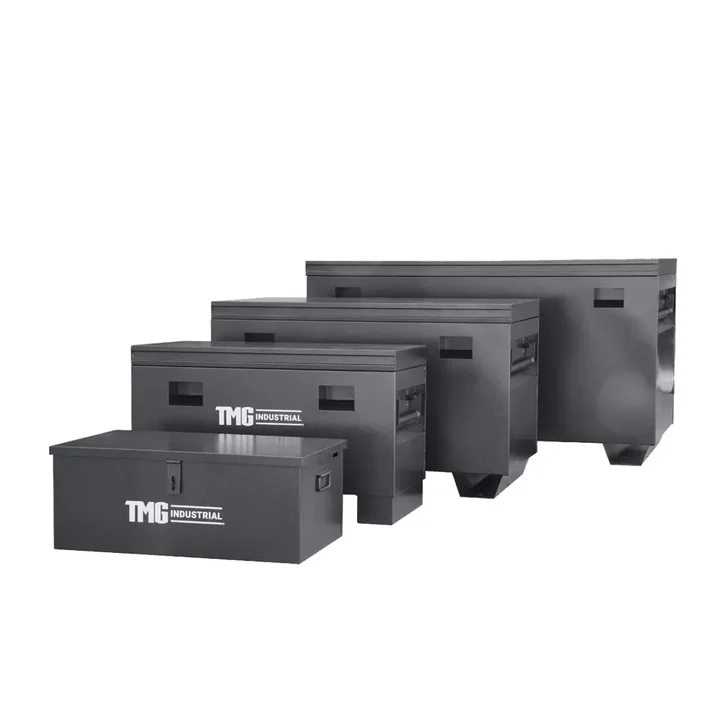
The boxes range from 30 to 60 cubic feet capacity. Heavy-gauge steel construction resists cutting, prying, and impact. Reinforced lids with lock hasps accept padlocks. Weather-resistant seals keep contents dry during rain. Forklift pockets enable easy relocation as work zones shift.
Security Features and Theft Deterrence
Effective job site security requires visible deterrence. A steel storage box signals that tools are protected, making thieves choose easier targets. The heavy-gauge steel resists bolt cutters and pry bars. Reinforced lid edges prevent prying at corners. Lock hasps are recessed or reinforced to prevent cutting.
For maximum security, contractors should use multiple boxes for different tool categories rather than one large box. This disperses risk and makes theft less efficient. Chaining boxes together or to fixed structures adds another layer of security.
Portability and Site Flexibility
Construction sites change constantly as work progresses. Storage must move with the workforce. Forklift pockets on steel boxes allow repositioning without unloading. When a building section is complete, the storage box can be moved to the next active area. This flexibility reduces walking time for workers retrieving tools.
At project completion, boxes can be loaded onto flatbed trucks for transport to the next site. The durable construction withstands repeated lifting and movement without damage.
Safety Practices and Operational Guidelines
Safe and effective use of job site storage boxes requires several key practices:
- Place on level, dry surface away from vehicle traffic
- Chain boxes together or to permanent structures when possible
- Use high-security padlocks with shrouded shackles
- Inspect for damage after each relocation
- Keep lid seals clear of debris for weather protection
Contractors should inventory tools stored in each box and photograph contents for insurance purposes. Keys should be issued only to trusted supervisors, with duplicates stored securely off-site.
Advantages and Limitations
Advantages of steel storage boxes include:
- 30 to 60 cubic foot capacity range
- Heavy-gauge steel construction for security
- Forklift pockets for easy relocation
- Weather-resistant seals protect contents
- Reinforced lock hasps for padlocks
- Stackable design for yard storage
Limitations to consider:
- Padlocks not included
- Heavy to move without forklift
- Requires regular lock inspection
- Not for liquid or hazardous material storage
- Seals require periodic replacement
Real-World Application Example
A Canadian construction company in Alberta managed a 9-month warehouse expansion. Tools valued at 40,000 dollars were left on-site overnight. Three theft incidents occurred within 4 months. The company purchased a set of steel storage boxes in 30, 45, and 60 cubic foot sizes. Power tools and survey equipment were locked in boxes each evening. Forklift pockets allowed placement near work zones. No further theft occurred after box implementation. The project finished on schedule without tool replacement costs.
Conclusion and Future Outlook
Construction job site steel storage boxes provide Canadian contractors with essential security for valuable tools and materials. The combination of heavy-gauge steel, portable design, and weather resistance makes these boxes practical for active sites. As construction costs rise, protecting tools from theft becomes increasingly important for project profitability. Future designs may include GPS tracking devices integrated into box construction and remote monitoring of lock status.
Contractors should evaluate steel storage boxes for any job site where tools are left unattended overnight. The range of sizes allows matching box capacity to project needs, from small renovation tools to large-scale construction equipment.