
What Modern Businesses Should Look for in an LMS Platform
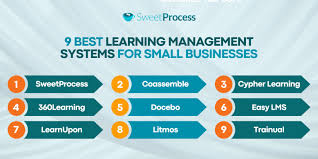
Learning Management Systems (LMS) have become a core part of how businesses train employees, onboard new hires, and manage knowledge at scale. What was once a simple content delivery tool has evolved into a system that directly impacts productivity, performance, and long-term growth.
For modern businesses, choosing an LMS is no longer just about hosting courses—it’s about enabling continuous learning in a structured, measurable way.
Align the Platform with Business Goals
Before evaluating features, it’s important to understand what the LMS is expected to achieve. Some organizations focus on compliance training, while others prioritize skill development, leadership growth, or onboarding efficiency.
The right platform should support these goals directly. Without clear alignment, even a feature-rich LMS can fail to deliver meaningful outcomes.
Focus on User Experience
An LMS is only effective if people actually use it. A complicated interface or confusing navigation discourages engagement, no matter how good the content is.
Modern platforms prioritize ease of use—clear dashboards, intuitive course structures, and seamless access across devices. When employees can navigate the system effortlessly, adoption increases naturally.
Personalization and Adaptive Learning
Not all learners have the same needs. A one-size-fits-all approach often leads to disengagement.
Personalization allows the LMS to tailor content based on user roles, skill levels, or learning progress. Adaptive learning paths guide users through relevant material, making the experience more efficient and meaningful.
This level of customization is becoming a standard expectation rather than an advanced feature.
Strong Content Management Capabilities
Businesses need flexibility in how they create and manage content. Whether it’s videos, documents, quizzes, or interactive modules, the LMS should support multiple formats.
Equally important is how easily content can be updated. As processes evolve and new information becomes available, learning materials need to stay current. A system that simplifies content management reduces the effort required to maintain accuracy.
Data and Reporting That Drive Decisions
Tracking completion rates is no longer enough. Modern LMS platforms provide deeper insights into learner behavior, engagement levels, and performance trends.
These insights help organizations identify skill gaps, measure the effectiveness of training programs, and make informed decisions about future learning strategies.
Data turns training from a passive activity into a measurable business function.
Integration with Existing Systems
An LMS does not operate in isolation. It needs to connect with HR systems, performance management tools, and other internal platforms.
Seamless integration ensures that data flows smoothly across systems. For example, employee progress in training programs can be linked to performance reviews or career development plans.
This connected approach creates a more cohesive learning ecosystem.
Scalability for Growing Organizations
As businesses expand, their training needs evolve. The LMS should be able to handle more users, more content, and more complex learning structures without performance issues.
Scalability also includes the ability to support different teams, departments, or even global operations with varying requirements.
A platform that grows with the business reduces the need for future transitions.
Evaluating Features in Context
When assessing different platforms, it’s easy to get caught up in feature lists. However, features only matter if they align with how the business operates.
For example, when teams evaluate options that include claned LMS features, the focus should not just be on what’s offered, but on how those capabilities support collaboration, engagement, and knowledge retention in real scenarios.
This approach ensures that the chosen platform delivers practical value rather than just theoretical benefits.
Supporting Continuous Learning
Modern businesses are moving away from one-time training sessions toward continuous learning models. Employees need access to resources that help them adapt to changing roles and technologies.
An effective LMS supports this by making learning accessible anytime, encouraging ongoing development rather than isolated training events.
Choosing the Right Platform for Long-Term Impact
Selecting an LMS is a long-term decision. It influences how knowledge is shared, how employees grow, and how efficiently teams operate.
Businesses that take a structured approach—focusing on usability, integration, scalability, and real-world application—are more likely to choose a platform that delivers lasting value.
In the end, the right LMS is not the one with the most features, but the one that fits seamlessly into the organization’s workflow and supports its learning objectives effectively.