
River Watcher: Flow Meters in Action
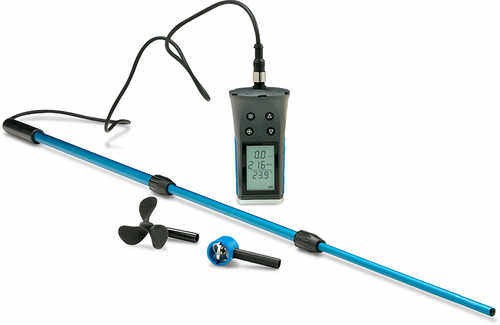
In the hidden veins of industry and infrastructure, the flow meter acts as a vigilant accountant. It doesn’t merely watch liquids or gases pass by. It measures, quantifies, and reports their movement with quiet dedication. Like a translator for the language of currents, it turns the rush of a river, the pulse of fuel, or the breath of compressed air into numbers we can comprehend and trust. Its presence is fundamental wherever knowing the rate of movement is crucial.
The Dance of Measurement: Flow Meter Mechanics
For centuries, simple mechanical Flow Meters held sway. Imagine the classic turbine type. As fluid rushes through a pipe, it strikes angled blades, causing a rotor to spin. Each rotation corresponds directly to a specific volume passing through. A magnetic pickup or gear train senses this spin, translating it into readable pulses or turning a pointer on a dial. It’s a direct, elegant mechanical ballet. Another veteran is the positive displacement meter. Picture interlocking gears or oscillating pistons trapping precise fluid pockets. Each cycle, each trapped pocket, represents a fixed volume counted mechanically. Their strength was, and often still is, their independence from external power and straightforward visual readout. They provided a dependable local answer to the fundamental question: how much has flowed.
However, the need for greater precision, remote data, and handling diverse fluids spurred evolution. The electronic flow meter emerged, a sophisticated sibling. These devices employ clever physics instead of moving parts. Ultrasonic meters send sound waves across or along the flowing stream. The difference in wave travel time upstream versus downstream reveals the velocity. Like listening to the river’s speed by its echo. Electromagnetic meters generate a magnetic field across the pipe. As conductive fluid flows through, it induces a voltage proportional to its speed. Coriolis meters, perhaps the most intricate, vibrate a tube. The flowing fluid causes a measurable twist in this vibration, revealing both mass flow rate and density. These methods generate electrical signals, enabling digital displays, data logging, remote monitoring, and integration into complex control systems.
Where Flow Meters Tell Their Tale
The domain of the flow meter is vast and essential. Simple mechanical meters still faithfully track water consumption in homes, monitor fuel dispensed at gas stations, or measure oil flow in basic lubrication systems. Their physical dials offer immediate reassurance. Meanwhile, their electronic counterparts are indispensable in modern life. Ultrasonic meters monitor vast volumes in water distribution networks or custody transfer of oil and gas. Electromagnetic meters precisely dose chemicals in water treatment or track slurries in mining. Coriolis meters ensure exact recipe proportions in food and beverage production or critical pharmaceutical ingredient mixing. Thermal mass flow meters manage delicate gas flows in semiconductor manufacturing or environmental monitoring systems. The choice hinges on the fluid, the required accuracy, the need for data integration, and the environment. A positive displacement meter might suffice for billing residential water, while a Coriolis meter is non-negotiable for blending jet fuel.
Peering forward, innovation continues unabated. Miniaturization allows flow sensors to fit into portable medical devices or compact analytical instruments. Wireless technology liberates data, allowing flow information to be accessed globally in real-time. Smart diagnostics embedded within the meters predict maintenance needs and optimize system performance. Despite this digital sophistication, the core mission endures. Whether through a spinning turbine, a shifted ultrasonic frequency, or a vibrating tube’s twist, the flow meter answers the persistent call: quantify the movement. It is the silent, indispensable witness to the currents that power our world, from the water in our taps to the fuel in our vehicles and the processes in our factories. Their contribution to efficiency, safety, and resource management is enormus. Truly, modern industry is heavily dependant on these tireless quantifiers of flow.