
Advancements in Minimally Invasive Operations: The Role of Da Vinci Robotic Surgery
The landscape of modern medicine has undergone a profound transformation over the past two decades, characterized by a steady shift away from traditional open operations toward minimally invasive techniques. This evolution aims to reduce physiological trauma, accelerate recovery times, and improve overall operational outcomes. Among the technological innovations driving this shift, sophisticated surgical platforms have taken center stage. Leading healthcare institutions, such as Liv Hospital, continually integrate advanced medical technologies to elevate the standard of patient care. At the absolute forefront of this technological revolution is Da Vinci Robotic Surgery, a highly advanced robotic-assisted platform designed to facilitate complex anatomical procedures with an unprecedented level of precision and control.
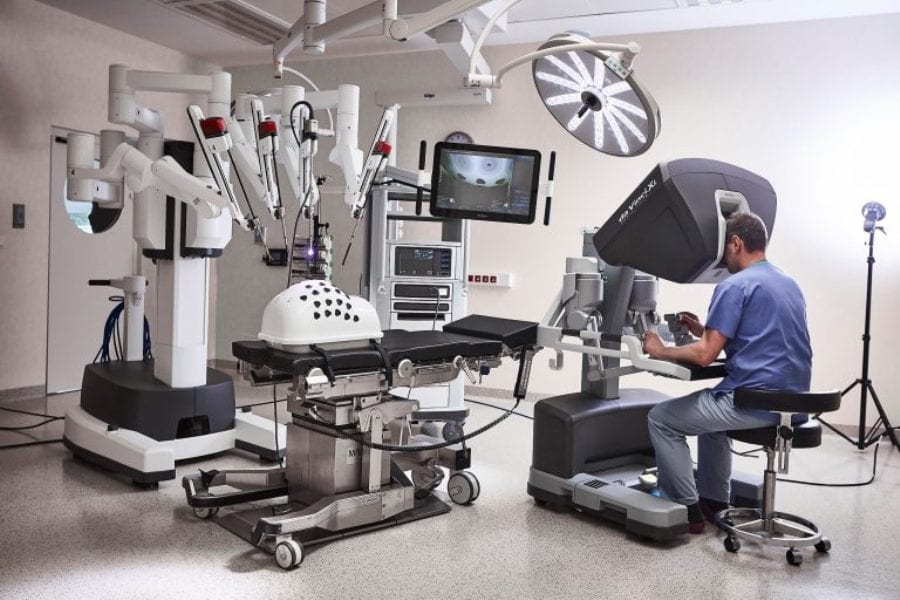
To appreciate the impact of this technology, it is essential to clarify a common misconception: the robotic system does not perform the surgery autonomously. Instead, it acts as an extension of the operating surgeon. The platform fundamentally consists of three primary components: the surgeon console, the patient cart, and the vision cart. During an operation, the surgeon sits at the ergonomic console, physically situated a few feet away from the operating table. From this station, the physician looks into a highly magnified, three-dimensional, high-definition visualization system that displays the internal surgical site in remarkable detail.
The patient cart is positioned directly alongside the operating table and is equipped with interactive mechanical arms. These arms hold miniaturized instruments that are introduced into the patient’s body through incisions that are often no larger than a dime. As the surgeon manipulates the master controls at the console, the system seamlessly and instantaneously translates those precise hand, wrist, and finger movements into exact, real-time movements of the surgical instruments inside the patient.
One of the most remarkable medical features of the platform is its ability to enhance human capability. The system features tremor-filtration technology, which smooths out any natural, microscopic tremors in the human hand. Furthermore, the specialized instruments boast an articulated design that offers a wider range of motion than the human wrist. This degree of articulation allows the surgeon to perform highly intricate dissection and precise suturing in tight, confined spaces deep within the body—maneuvers that would be exceptionally difficult, if not impossible, using traditional laparoscopic tools or open surgical methods.
The benefits for individuals undergoing these procedures are substantial and widely documented in medical literature. Because the technology relies on tiny incisions rather than large anatomical cuts, patients experience significantly less tissue trauma. This minimal disruption of surrounding tissues directly correlates to reduced intraoperative blood loss and a lower requirement for blood transfusions. Postoperatively, patients report a marked decrease in pain, which consequently reduces the reliance on narcotic pain medications. Furthermore, the smaller incisions heal faster, leading to a cosmetically favorable outcome with minimal scarring, and drastically lower the risk of surgical site infections. Most importantly, the minimally invasive approach typically results in a shorter hospital stay and allows patients to resume their normal daily activities much faster than traditional open approaches.
The versatility of the platform allows it to be utilized across a broad spectrum of medical disciplines. It is extensively employed in urology, where the system has become a gold standard for delicate operations such as prostatectomies, nephrectomies, and complex urinary tract reconstructions. The magnified 3D vision and precise articulation are particularly beneficial in the pelvic cavity, allowing surgeons to spare delicate nerve bundles and preserve essential organ functions. Beyond urology, the technology is highly favored in gynecological oncology, general surgery for complex hernia repairs or colorectal resections, and even highly specialized cardiothoracic procedures.
As medical technology continues to evolve, the integration of advanced imaging, augmented reality, and data analytics into surgical platforms will only further enhance the capabilities of the operating room. The transition toward robotic-assisted platforms represents a permanent paradigm shift in operative care. By empowering highly trained surgeons with tools that amplify their visual and physical capabilities, the medical community continues to push the boundaries of what is surgically possible. The result is a healthcare environment where highly complex interventions are performed with enhanced safety, remarkable precision, and a steadfast focus on optimal patient recovery.