
Ball Mill vs Vertical Roller Mill Noise: Urban Plant Solutions
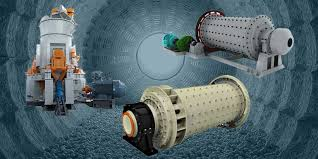
In today’s cement industry, efficiency is no longer the only concern — noise pollution is also a major factor, especially for plants located near residential areas. For decades, the Ball mill has been the go-to choice for grinding, while the Vertical roller mill has grown in popularity due to its energy efficiency and compact design.
But when it comes to operating in urban or noise-sensitive environments, the choice between these two systems can make or break community relations. Leading equipment suppliers like Cementl are now focusing on solutions that not only improve grinding efficiency but also reduce noise levels for sustainable, urban-friendly operations.
Understanding the Noise Challenge in Cement Grinding
Grinding cement raw materials generates significant mechanical noise. The source and intensity of noise vary between the cement raw material ball mill and the vertical roller mill, largely due to their operating principles.
- Ball mill noise comes primarily from the impact of steel balls hitting the material and the drum’s internal surface.
- Vertical roller mill noise is more related to the contact between grinding rollers and the table, as well as the gear unit’s operation.
In urban settings, excessive noise can lead to complaints, stricter regulations, and even operational restrictions.
Ball Mill Noise Profile
The Ball mill is a large, rotating cylinder partially filled with steel balls. As the drum rotates, the balls fall onto the material, breaking it down into fine powder. This constant impact produces a distinct, rhythmic noise that can be quite loud.
Typical issues:
- High impact noise from steel balls.
- Drum reverberation amplifying sound levels.
- Fan and motor noise adding to the total output.
Mitigation methods include:
- Using noise-dampening liners inside the cement raw material ball mill.
- Enclosing the mill in acoustic insulation panels.
- Regular maintenance to avoid loose components that rattle or vibrate.
Vertical Roller Mill Noise Profile
The Vertical roller mill uses a grinding table and rollers to crush material, which generally produces a different noise signature — less impact-driven and more continuous.
Advantages over a ball mill for noise control:
- Lower overall decibel levels due to the rolling action instead of direct impacts.
- Compact design allows for easier enclosure and soundproofing.
- Fewer moving parts reduce mechanical clatter.
However, vertical roller mills are not silent — the gearbox, fans, and material movement can still create noticeable sound.
Urban Plant Solutions: Hybrid and Custom Designs
Some cement plants in noise-sensitive zones are moving toward hybrid systems that combine the Vertical roller mill for pre-grinding with the Ball mill for finish grinding. This reduces the total runtime of the ball mill, cutting down noise exposure.
Cementl has developed custom systems with:
- Enclosed gearboxes to limit tonal noise.
- Advanced liners for the cement raw material ball mill to reduce steel-on-steel sound.
- Acoustic barriers that blend with plant architecture.
- Variable-speed drives to optimize performance and minimize unnecessary noise.
5 Practical Noise Reduction Strategies
- Acoustic Enclosures – Enclose both mills and critical components to absorb and block noise.
- Dampening Liners – Upgrade to sound-reducing liners inside the ball mill drum.
- Isolated Foundations – Mount mills on vibration-isolated bases to prevent structure-borne noise.
- Optimized Operation Schedules – Run noisier equipment during daytime hours in urban settings.
- Hybrid Grinding Approach – Use a vertical roller mill for coarse grinding and a ball mill for precision work, reducing total noise output.
Choosing the Right Mill for Urban Plants
When selecting between a Ball mill and a Vertical roller mill, urban cement plants must balance:
- Noise limitations set by local regulations.
- Space constraints — vertical mills take up less floor space.
- Energy efficiency — vertical mills often consume less power for fine grinding.
- Material properties — harder or more abrasive materials may still benefit from the cement raw material ball mill finish.
Cementl offers consultation services to help plants make the right choice, factoring in both production needs and environmental compliance.
Final Thoughts
Noise control in cement grinding is no longer optional — it’s a necessity for urban and environmentally-conscious operations. While the Ball mill is a proven workhorse, its higher noise profile can be a challenge in residential areas. The Vertical roller mill offers a quieter, more compact alternative, but each has its place depending on the application.
For the quietest, most efficient operation, many plants are embracing hybrid setups with Cementl’s advanced designs, ensuring compliance with regulations while maintaining top-tier production. In the future, we can expect more cement producers to adopt these innovative noise reduction solutions, especially in urban areas where community relations matter as much as product quality.